

What Is PAT Testing? 8 Essential Areas To Know
Table of Contents
PAT Testing: Electrical Safety in the Workplace
What is PAT Testing?
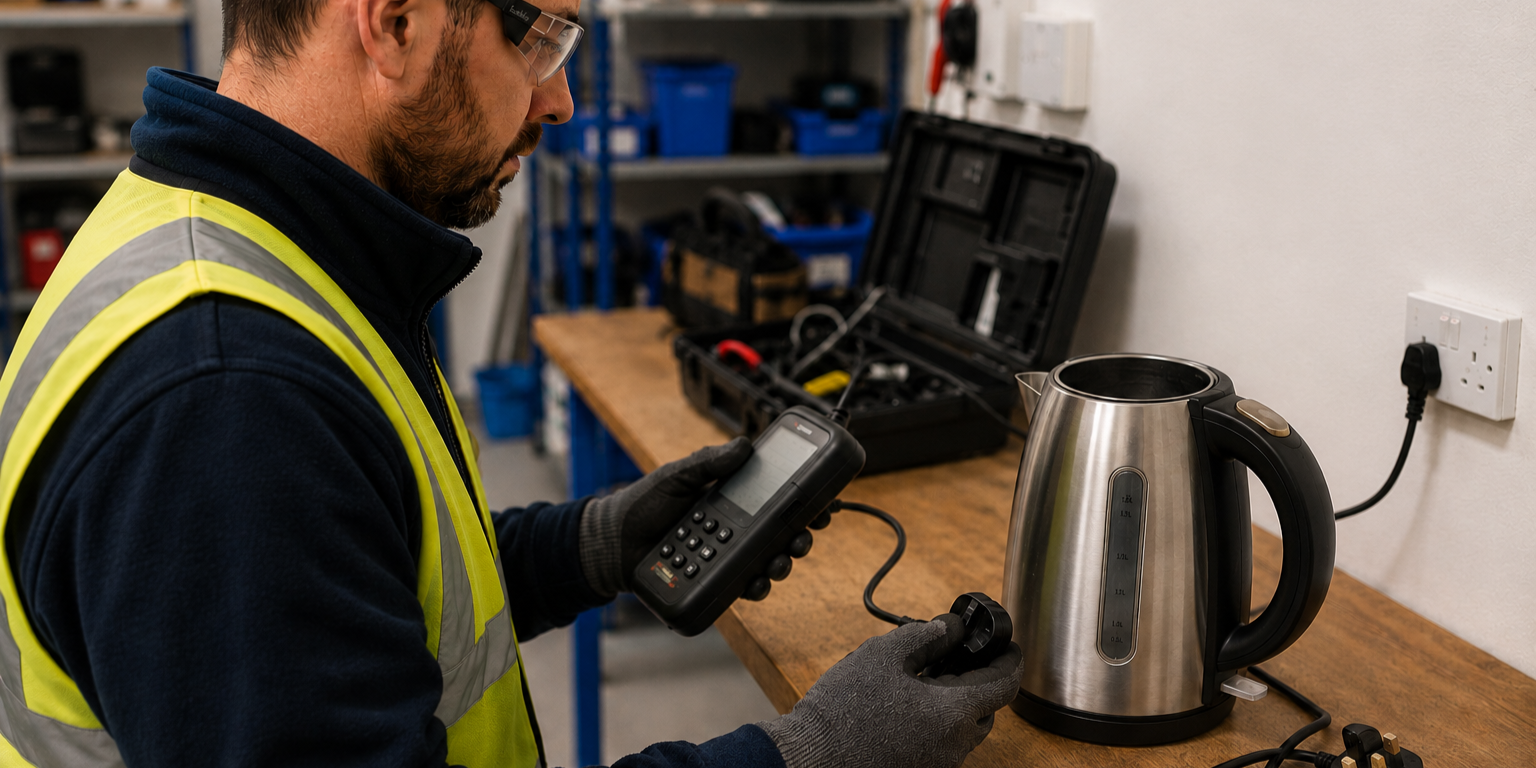
PAT Testing is very simple, if you’ve ever seen an electrician going around with a little handheld device, plugging kettles or laptop chargers into it and then sticking a green pass sticker on the cable, you’ve seen PAT testing in action. It’s one of those things almost every business has to deal with at some point, but very few people actually understand what’s going on or why it’s needed.
What Does PAT Testing Actually Stand For?
PAT stands for Portable Appliance Testing. It’s basically what it says on the tin, it’s the process of checking that electrical appliances – the ones you plug into a wall socket rather than hard-wired ones – are safe to use. Think of it as things such as kettles, monitors, extension leads, power tools, printers, microwaves, basically anything that has a plug on the end.
The point of the test is simple: to catch any faults before they can cause serious problems such as a fire, an electric shock or worse. Cables fray, plugs get damaged, internal wiring can degrade over time without anyone noticing from the outside. PAT testing is there to find those problems before they can find you.
Is PAT Testing a Legal Requirement?
In the UK there is no law that says “you must PAT test your appliances every 12 months”. However, what does exist is the Electricity at Work Regulations 1989, along with the Health and Safety at Work Act 1974, both of which say that employers have a duty to ensure electrical equipment is maintained in a safe condition.
PAT testing is simply the most recognised and practical way of proving that you’re meeting that duty. Meaning that while nobody can point to a specific clause forcing you to test every appliance annually, if something does go wrong and you can’t show any record of checking your equipment, that’s a problem – especially with insurers and if there’s ever an accident investigation.
This is why most companies bring in a qualified commercial electrician to carry out testing rather than doing it in-house. It’s not just about having the right equipment – a competent tester will know what to look for, how to interpret any results and how to keep records that actually hold up if they’re ever needed.
Who Needs PAT Testing?
Any industrial, commercial or retail site with electrical equipment and staff, customers or contractors on the premises. This covers warehouses, factories and production lines, offices, shops and retail units, hospitality venues, workshops – in essence, anywhere plug-in equipment is being used day to day. Even equipment that barely gets used still needs checking, just because something isn’t being used doesn’t mean it hasn’t deteriorated because the risk isn’t really about how often something is used, it’s about how safe it is to use at all.
For instance, In industrial and warehouse environments especially, equipment tends to take a lot more punishment – trailing cables, forklift traffic, damp or dusty conditions – so testing schedules are often need to be tighter together than a typical office would require.
What Happens During a PAT Test 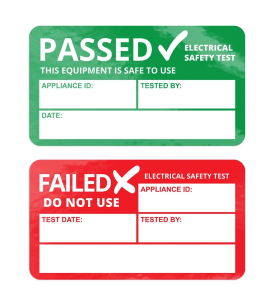
There are two parts to any PAT Test. First there’s a visual inspection, which can catch the majority of faults – This is where the tester looks for damaged casing, exposed wires, incorrect fuses, signs of overheating, loose plugs, that sort of thing. It may sound basic, but a huge percentage of dangerous appliances get flagged just by looking at them properly.
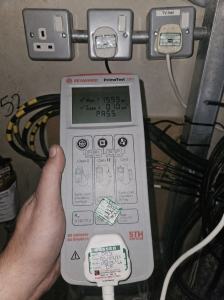
Secondly comes the electrical testing itself, done with a PAT tester unit. Depending on the class of appliance, this typically checks things like:
- Earth continuity – making sure the earth wire is doing its job
- Insulation resistance – checking there’s no risk of current leaking where it shouldn’t
- Polarity – confirming the wiring inside the plug is correctly connected
- Load test/leakage current – checking the appliance draws power as expected without issues
Each appliance then gets a pass or fail which is labelled via a sticker with the test date (and often the next due date) and everything gets logged so there’s a paper trail if it’s ever needed.
How Often Should Testing Happen?
A lot of confusion can come here as there isn’t one answer that can be used for everything. It depends on the type of equipment, the environment it’s used in, and how much wear and tear it’s likely to see. The IET Code of Practice gives guidance rather than a strict hard rules, but as a rough example across the sites we typically work on:
- Office equipment like laptops and monitors in a commercial setting: every 2-4 years, sometimes longer
- Retail equipment such as tills, display units and stockroom appliances: every 1-2 years
- Portable tools and equipment in industrial or workshop settings: every 6-12 months
- Equipment on construction or fit-out sites: every 3 months, because the risk of damage is so much higher
- Extension leads and multi-way adaptors: usually annually, since these take a lot of abuse regardless of setting
A competent engineer will usually assess your environment and equipment types then recommend a sensible schedule rather than applying a one-size-fits-all interval.
What Happens If Something Fails?
If an appliance fails, it shouldn’t be used until it’s either repaired or replaced. A good tester will be able to flag exactly why it failed too – whether that’s a simple fix like a new plug or fuse, or something more serious that means the item needs binning altogether. It’s worth saying: a failed PAT test doesn’t automatically mean the appliance is dangerous in every case, sometimes it’s a straightforward fix, but it does mean it shouldn’t go back into use until it’s been sorted.
Why Bother Getting It Done Properly
Beyond the legal and insurance side of things, there’s a simpler reason: it’s gives peace of mind for relatively little outlay. A proper PAT testing visit for a commercial or industrial site doesn’t take long and doesn’t cost much compared to the cost of a fire, an injury or a claim against the business. It also tends to catch problems with equipment long before they become obvious, which saves money on replacements and repairs down the line too.
If it’s been a while since your workplace had appliances checked, or you’re not sure what your current testing schedule should look like, it’s worth getting a qualified engineer to take a look and advise properly rather than guessing.
Get PAT Testing Sorted by a Qualified Team
If it’s been a while since your site had appliances checked or you’re not sure what your current testing schedule should look like, it’s worth getting a qualified team to take a look and advise properly rather than guessing. As electrical and mechanical contractors covering the North West of England, PAT testing is one part of a wider range of electrical services we provide to commercial, industrial and retail clients – alongside fixed wire testing, installation, and ongoing maintenance work.
Summary
PAT testing is a straightforward way of checking that portable electrical appliances – kettles, laptops, power tools, extension leads, anything with a plug – are safe to keep using. There’s no single law demanding it happen on a fixed schedule, but employers do have a legal duty to keep electrical equipment safe and PAT testing is the standard way of proving that duty is being met. Getting it done regularly means faulty cables and damaged appliances get caught before they cause a shock, a fire or worse – protecting people, property and for any business’ giving you a paper trail if it’s ever needed.
Do your commercial, industrial or retail sites need PAT Testing?
Get in Touch
Need More Information?
Are you unsure about whether you need a PAT Test or an EICR? Click one of the links below to find comparison between them or more a in-depth look into EICR