

EICR vs PAT Testing – 8 Differences To Know
Table of Contents
EICR vs PAT Testing: What’s The Difference?
What Is The Difference Between EICR vs PAT Testing?
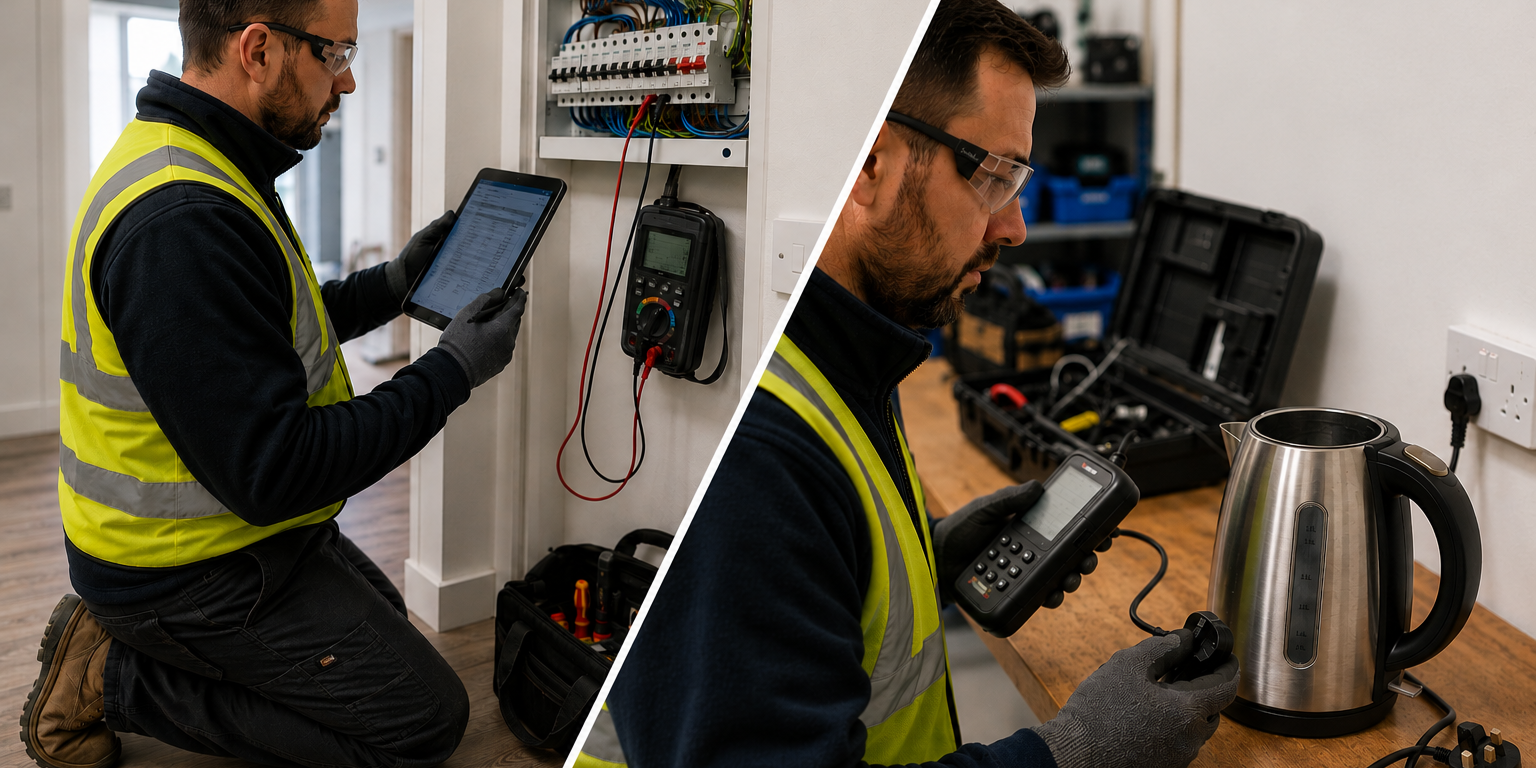
In general they both serve a similar purpose in that they’re tests done by qualified engineers to find any electrical faults, both either pass or fail based on their findings and both are about keeping people safe – but whereas EICR is about the building’s electrics, PAT is about the appliances you plug into them.
But as with most things, its not as simple as it first seems. Though they may seem similar, they check completely different areas and mixing them up (or assuming one covers the other) can leave a gap in your compliance.
What do they mean?
What is EICR?
EICR (also known as Fixed Wire Testing) stands for Electrical Installation Condition Report. It’s a document produced after a qualified electrician inspects and tests the fixed electrical installation in a property – these include the wiring, consumer unit (fuse box), sockets, switches and light fittings that are permanently connected to the building.
What is PAT Testing?
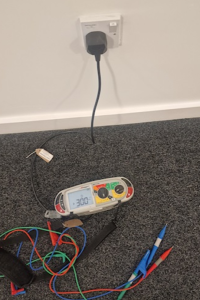
PAT stands for Portable Appliance Testing. In simple terms, it’s the process of checking that electrical appliances (the ones you plug into a wall socket rather than hard-wired ones) are safe to use. So think of things such as kettles, monitors, extension leads, power tools, printers, microwaves, essentially anything with a plug on the end.
Side by Side Comparison
EICR
PAT Testing
Fixed wiring, sockets, consumer unit and circuits built into the property
Any plug-in appliances (kettles, laptops, power tools, extension leads etc.)
Legally required for landlords every 5 years; businesses while not explicitly named, it is effectively mandatory in order to satisfy workplace safety and insurance obligations. Finally, its voluntary for homeowners who live in their own property.
Not a fixed legal rule, but covered by the Electricity at Work Regulations 1989 and Health & Safety at Work Act 1974. Employers and landlords are legally required to keep electrical equipment safe and PAT testing is simply the most common way to prove that.
For commercial and industrial sites it ranges from 1 – 5 years depending on the level of risk. In terms of private and social rented properties, Generally every 5 years or in the case of landlords, on change of rental property tenancy.
There is no set time frame or rule, the time varies depending on equipment and environment they are being used it – it can be anywhere from every 3 months (construction sites) to every 2-4 years (office equipment)
A formal report would be produced, classifying any issues found (e.g. satisfactory or codes for remedial work needed)
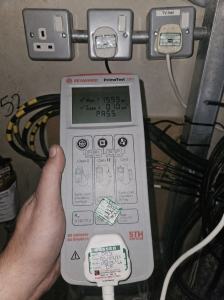
Stickers saying pass/fail would be attacked to each appliance, with a test date and (often not always) next due date
Are Both Needed?
In most commercial and industrial settings, yes. An EICR tells you the building’s wiring is safe to plug things into, while PAT testing tells you the things you’re plugging in are safe to use. One without the other only covers half the picture – you could have a perfectly sound electrical installation and still have a frayed kettle lead waiting to cause a problem, or vice versa.
For landlords specifically, an EICR is a legal must every 5 years. PAT testing becomes relevant on top of that if the property comes with appliances included, since those still need to be safe for tenants to use.
Getting Them Tested
Because they cover different parts of the same system, it often makes sense to have both handled by the same team – one visit, one point of contact, and records that line up rather than living in two different places. As electrical and mechanical contractors covering the North West of England, we carry out both PAT testing and EICRs for commercial, industrial and retail clients, alongside fixed wire testing, installation and ongoing maintenance work.
If you’re not sure whether you need one, the other, or both, it’s worth having a quick chat with a qualified engineer rather than guessing – it’s a small thing to get right and a costly thing to get wrong.
Need More Information?
If you need more information about either PAT Testing or EICR, then click one of the links below to be taken for a more in-depth look